
1. Start early!
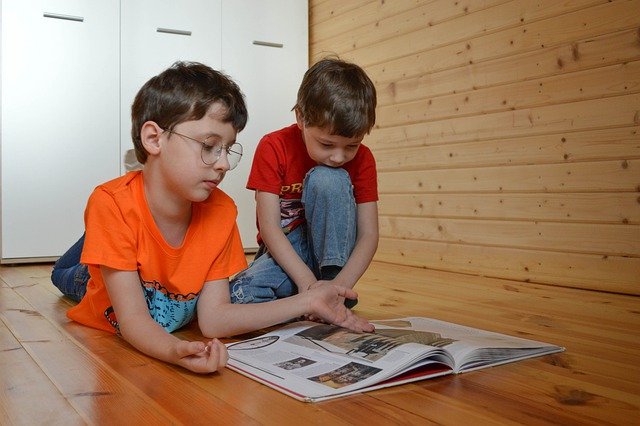
An interest in books should be awakened in every child as early as possible. There are books even for the very smallest: they should be sturdy, in a handy format and, where appropriate, wipeable. Large pictures of familiar objects quickly catch a child's curiosity.
2. Read aloud, read aloud, read aloud!
Children usually take great interest in settled rituals, so build reading aloud into the day and so create a positive relationship with books and texts. Not everyone has enough time for it, and not everyone is a gifted storyteller. So do reach for an audio CD now and then when you have neither the time nor the inclination to read aloud yourself. That is of course no equal substitute. Reading aloud should always involve communication between you and the child, which is why doing it together matters so much.
Most children ask questions about what they have just heard of their own accord. If not, you should encourage your child to talk about the book. Let your child put their thoughts into words unhurried, and show that you are listening and taking them seriously.
Invent a different ending to the story together with your child. When you have read a story several times, try building in a small mistake and see what happens... Think up games or activities that add to the content of the book or deepen it.
see also tips on reading aloud from Stefanie Eckmann-Schmechta
3. Going deeper into a book
There are various ways to go deeper into what a book contains. Through drawing, craft work or setting a text to music, a child can experience actively what is written.
Children want to take part in a book and act out what the main character went through. Play-acting or mime lend themselves well to that.
Word games widen a child's vocabulary and build the ability to express themselves. For small children, finger games work particularly well, joining language with movement.
4. Visits to the library
Visit the library together.
An afternoon can also be given a particular theme, agreed with the child beforehand: fairy tales, books about the child's favourite animal, particular authors or book series (Pumuckl, Pippi Longstocking and so on).
A library card of their own, or a magazine subscription, make good presents!
5. Take the child's interests into account
What matters first is not what is read but that the child reads at all. Only someone who knows the whole range can later tell good from bad. You will find worthwhile books for every age with us.
Go with your child's interests. A 6-year-old football fan will not necessarily take to fairy tales, and if your daughter is going through a horse phase, do let her read her way through the whole range of horse books. Children often choose books on particular subjects that interest them at that moment, and through them current worries can be worked through. Alongside fiction we offer a wide choice of children's non-fiction on every subject.
Some children would rather read comics than books with too much text, and there is a thoroughly good range in that field.
For beginner readers in particular, who often feel daunted by books with a lot of text, we offer books made especially for the first reading age.
6. Which books for which age?
Choose books to suit the age and do not overtax your child. A book capable of "flattening" a child will hardly win over a reluctant reader. We are glad to help you choose.
7. Combining several media
Books, films and television: many television series have books to go with them.
If your child has a favourite programme on television, simply offer them the book as well. Quite a few children have become bookworms since the Harry Potter film!
Source: hoppsala.de - Leseförderung im Kleinkindalter by Gaby Silbermann
8. Interesting links
- Klexikon - the free children's encyclopaedia
- klicksafe for children
- LegaKids - dyslexia and difficulties with reading or arithmetic
- Einfach vorlesen!
- You will find the best books for reading aloud with us: katalog.owbib.de